Pre-Foreclosure Help in Murfreesboro, Tennessee

The City That Grew Too Fast
Murfreesboro wasn’t supposed to be like this. For most of its history, it was just a nice mid-sized Tennessee city. The historic town square with the courthouse. Middle Tennessee State University provides stability and culture. Close enough to Nashville (30 miles) to access the big city, far enough away to avoid the chaos and cost.
Then something changed. The 2000s happened. The 2010s happened. Nashville exploded, and Murfreesboro became the escape valve—where people moved when they couldn’t afford Nashville anymore, where they commuted from, where developers built entire neighborhoods seemingly overnight.
The population doubled. Then it kept growing. In 1990, Murfreesboro had about 45,000 people. By 2000, it was 68,000. By 2010, it was 109,000. Today it’s pushing 170,000 and still growing at one of the fastest rates in Tennessee.
That kind of explosive growth creates opportunity. It also creates chaos. Infrastructure that can’t keep up. Overcrowded schools. Traffic gets worse every year. And a housing market that went from affordable to expensive so fast that longtime residents got priced out of their own city.
If you’re reading this, you’re probably dealing with the fallout of that growth. Maybe you bought during the boom thinking prices would keep climbing. Maybe you’re a longtime Murfreesboro resident watching your property taxes skyrocket as your neighborhood gentrifies. Maybe you moved here from Nashville thinking you were making a smart financial move, only to discover that Murfreesboro isn’t as cheap as you thought and the commute is killing you.
Maybe you work at MTSU or the Amazon warehouse or Nissan in Smyrna or one of the healthcare facilities, and your wages haven’t kept pace with the cost of living in a city that’s transforming into something else entirely.
Here’s what matters right now: You’re in pre-foreclosure, which means you still have control. The bank hasn’t taken your house yet. You still have options. You can still make decisions about how this ends.
Let’s talk about what those options actually are, and why Murfreesboro specifically makes your situation both challenging and potentially solvable.
Understanding Murfreesboro’s Complicated Real Estate Reality
Before we get into foreclosure timelines and options, you need to understand what makes Murfreesboro’s housing market different from other Tennessee cities.
The Nashville Overflow Problem
Murfreesboro is no longer its own independent housing market. It’s Nashville’s bedroom community now, whether locals like it or not. That means:
Prices are driven by Nashville refugees. People who can’t afford a $400,000 starter home in Nashville proper come to Murfreesboro thinking they’ll find affordability. They bring Nashville incomes and Nashville expectations. This pushes up prices for everyone, including locals who make Murfreesboro wages, not Nashville wages.
The commute is the trade-off. If you work in Nashville—in healthcare, music industry, hospitality, state government, whatever—you’re probably commuting 35-50 minutes each way. In good traffic. Except traffic is never good anymore on I-24. So it’s often an hour or more. That’s two hours a day in your car. Ten hours a week. Over 500 hours a year. The time cost is brutal. The financial cost (gas, vehicle maintenance, wear and tear) adds up to thousands per year.
You bought thinking Murfreesboro was affordable. Compared to Nashville, it was. But compared to your actual income and actual costs, it wasn’t. And now you’re trapped—can’t afford to stay, can’t afford to move back to Nashville, stuck in the middle.
The Student Housing Bubble
MTSU has over 21,000 students. That’s a massive student population for a city this size. It creates a weird rental market where:
Entire neighborhoods are student housing. Areas near campus are dominated by rentals. Landlords buy houses specifically to rent to students. This drives up purchase prices because investors are willing to pay more than families, knowing they’ll make it back in rent.
The rental market is seasonal and volatile. High demand during the school year, drops in summer. Students are not always great tenants. Turnover is constant. If you thought you’d rent out your house when you needed to move, you’re competing with professional landlords who have this down to a system.
Student rental rates are inflated. Students (often using financial aid or parental money) will pay more per bedroom than families will pay for whole houses. This distorts the market and creates unrealistic expectations about rental income.
The Development Sprawl
Drive around Murfreesboro and you’ll see neighborhoods everywhere. New construction is spreading in every direction. Massive apartment complexes. Subdivisions carved out of what used to be farmland.
This creates:
Oversupply in some segments. So many new houses and apartments that older neighborhoods struggle to compete. If your house is 15-20 years old, you’re competing with brand new construction that has all the features buyers expect now.
Infrastructure is struggling to keep up. Schools are over capacity. Traffic is terrible. The city can’t build roads and schools fast enough to keep up with development.
Declining older neighborhoods. As everyone chases new construction, older areas get left behind. Property values in established neighborhoods near the square or near campus haven’t appreciated the way outer areas have. If you bought in the “wrong” neighborhood, you might not have the equity you expected.
The Specific Neighborhood Dynamics
Near the Square/Downtown: Historic homes, walkable to downtown. Some areas are gentrifying (coffee shops, breweries opening), others not. Mixed market—some houses sell fast, others sit.
Near MTSU Campus: Student rental territory. High turnover, high competition with investors. Hard to sell to families who don’t want student neighbors.
West Murfreesboro (Medical Center Parkway area): Heavily developed. Mix of commercial and residential. Convenient to everything. Traffic nightmare. Established neighborhoods are mixed with new.
South/Southeast (Lascassas, Walter Hill areas): More rural feel. Longer commute to Nashville. More affordable historically but growing fast. Infrastructure is lagging in development.
North (toward Smyrna): Close to the Nissan plant. Working-class areas. Some industrial. Mixed economic demographics.
New Developments (everywhere): Subdivisions with HOAs, similar-looking houses, amenities like pools and playgrounds. These sold fast during the boom. Some are holding value, others not so much depending on location and builder quality.
Where you are matters hugely for how fast you can sell, what price you can get, and what options you have.
The Weight You’re Carrying
Let’s talk about what you’re actually dealing with, because the stress of foreclosure in a fast-growing city has specific flavors.
The “Everyone Else Is Thriving” Feeling
Murfreesboro is constantly in the news about growth, development, new businesses opening, and population increasing. The narrative is all positive—opportunity, growth, success.
And you’re about to lose your house.
There’s a cognitive dissonance. The city is supposedly booming. Jobs are supposedly plentiful. The economy is supposedly strong. So why can’t you make it work?
You see new neighborhoods going up everywhere. You see businesses opening. You see people moving here and buying houses. And you feel like a failure because you can’t hold onto the house you already have in a city where everyone else seems to be succeeding.
But here’s the truth: The growth story hides a lot of struggle. Not everyone is thriving. The service workers, the adjunct professors at MTSU, the retail employees, the people who make Murfreesboro actually function day—to—day—they’re not all getting rich off the growth. They’re struggling with rising costs and stagnant wages just like you.
The poverty rate in Murfreesboro is about 20%. One in five people. That’s higher than the Tennessee average, higher than the national average. But you don’t see those people in the articles about how great Murfreesboro is doing.
The Commute Is Destroying Your Life and Budget
If you work in Nashville, the commute is brutal. Not just the time—though two hours a day is a lot of time—but the cost.
Gas: easily $300-400/month depending on your vehicle. Vehicle maintenance: the miles add up fast. Repairs: more frequent. Car replacement: sooner than you planned. The total cost of commuting to Nashville from Murfreesboro is probably $5,000-7,000 per year, maybe more.
Plus the time. Two hours a day you’re not with your family. Not exercising. Not relaxing. Not doing anything except sitting in traffic, stressed, listening to podcasts or music or nothing, watching your life pass by through the windshield.
You bought in Murfreesboro to save money on housing. But the commute costs ate up the savings. And now you’re behind on the mortgage and exhausted from the daily grind.
The Property Tax Shock
Murfreesboro property taxes have been climbing as property values increased. If you bought your house ten years ago for $150,000 and now it’s assessed at $280,000, your property taxes have more than doubled even though your income didn’t.
If you’re on a fixed income—retired, disability, whatever—those tax increases are devastating. Even if your mortgage payment stayed the same, your escrow payment went up because the taxes went up. Suddenly you’re paying hundreds more per month than you budgeted for.
The School Overcrowding Stress
If you moved to Murfreesboro partly for the schools—Rutherford County Schools serves over 48,000 students—you might be dealing with overcrowding, rezoning, and schools at capacity. This affects your kids’ education and your stress level.
The irony: you’re struggling to keep a house in a good school zone while your kids are in overcrowded classrooms because the growth has overwhelmed the school system.
The Amazon Effect
Amazon opened a massive fulfillment center in Murfreesboro. It employs thousands of people. It was supposed to be an economic engine for the city.
For some people, it has been. Steady job, decent pay, benefits. But for others, it’s been grueling warehouse work, physical toll, high turnover, not the career opportunity it was sold as.
If you or your spouse works at Amazon and you’re dealing with the physical demands, the schedule unpredictability, the stress of making rate—and the pay isn’t enough to cover the mortgage on top of everything else—you’re not alone.
The Medical Debt Spiral
Murfreesboro has good healthcare facilities—Ascension Saint Thomas Rutherford, TriStar StoneCrest Medical Center. But even with insurance, medical debt can destroy you financially.
You or your spouse or your kid gets sick. Needs surgery, hospitalization, and ongoing treatment. Even with insurance, the deductibles, co-pays, and out-of-pocket maximums add up to thousands or tens of thousands of dollars. You’re trying to pay the mortgage and the medical bills and something has to give.
Medical debt is the number one cause of bankruptcy in America. It’s probably a leading cause of foreclosure too. You’re not irresponsible. You’re not bad with money. You’re dealing with an insane healthcare system that bankrupts people even when they have insurance.
The Divorce Financial Devastation
Murfreesboro’s growth and commute culture puts stress on marriages. Long commutes mean less family time. Financial stress from trying to afford a growing city on stagnant wages creates tension. Two-career families where both people are stretched thin lead to burnout and resentment.
Divorce happens. And when it does, the house becomes a problem neither person can solve alone. What was manageable on two incomes is impossible on one. What was a shared asset becomes a contested liability. What was home becomes the thing you’re both desperate to escape.
All of these situations—these real, common situations in Murfreesboro—lead to foreclosure. None of them are about personal failure. They’re about systemic problems in how fast-growing cities work and who gets left behind in the growth story.
How Tennessee Foreclosure Works
You need to understand the actual process, the real timeline, what’s happening behind the scary letters you’re getting.
Tennessee’s Non-Judicial Process
Tennessee allows non-judicial foreclosure, which means the lender doesn’t have to go to court. They can foreclose without a judge’s involvement. This makes the process faster than in judicial foreclosure states.
Here’s the timeline:
Months 1-3: Default and Notices
You miss payments. You get letters and calls. They’re annoying and stressful but not immediately threatening. The lender is required to send you notice of the default and allow you to cure it (catch up on payments).
During this period, you still have maximum options. This is the best time to act, even though it’s the time most people freeze and hope it goes away.
Month 3-4: Notice of Sale
After 90-120 days of non-payment, the lender sends a formal Notice of Sale. Tennessee law requires at least 20 days’ notice before the actual sale.
This notice must include:
- Date, time, and location of the foreclosure sale
- Description of the property
- Amount owed
They send this to you by certified mail. They also publish it in a local newspaper—in Murfreesboro, that’s the Daily News Journal—once a week for three consecutive weeks before the sale.
Publication Means Public
When it’s published in the newspaper, it’s public. Anyone can see it. Your neighbors might see it. Your coworkers might see it. In a city of 170,000, it’s less likely than in a small town, but it’s still there, still public record.
The Sale: Rutherford County Courthouse
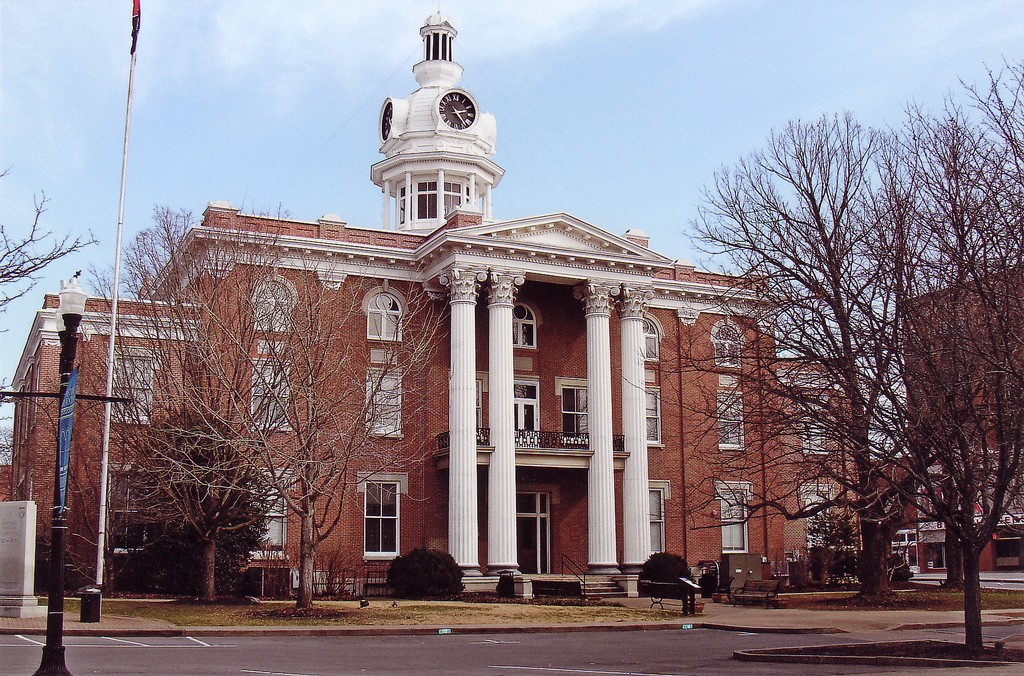
On the scheduled date—usually a Tuesday or Thursday morning—your house goes to auction on the steps of the Rutherford County Courthouse on the Square in downtown Murfreesboro.
It’s public. The lender bids the amount you owe (plus costs). Investors might bid higher. Whoever bids the highest wins.
Your house—your home, where your kids grew up, where you celebrated holidays, where you lived your life—gets sold to whoever has the most cash.
After the Sale: You Have to Leave
Tennessee doesn’t have a long redemption period. Once it’s sold, it’s sold. You have to vacate. If you don’t leave voluntarily, the new owner can evict you through the court system. Sheriff’s deputies. Forced removal. It’s traumatic and humiliating.
Deficiency Judgments Are Possible
Tennessee allows deficiency judgments. If your house sells for less than you owe—which happens often—the lender can sue you for the difference.
So you lose your house AND still owe money. You’re homeless and in debt. Worst possible outcome.
Here’s What Most People Don’t Understand
At any point before that gavel comes down, you can stop this. You can sell the house yourself. You can negotiate a short sale. You can work with the lender on modifications. You can choose how this ends instead of having it dictated to you.
But you have to act. Waiting doesn’t help. Hoping doesn’t help. Avoiding the mail doesn’t help. Only action helps.
What Makes Murfreesboro Different
Murfreesboro’s explosive growth creates both problems and opportunities for you.
The Market Is Active
Unlike slow-growth cities where houses sit for months, Murfreesboro’s market moves. People are still moving here. Investors are still buying. Demand exists.
If you price realistically and your house is in decent condition and a decent location, it can sell. Traditional sale is still possible for many people, even in pre-foreclosure, if they have time and realistic expectations.
But “decent condition” and “realistic pricing” are key. If your house needs work and you’re pricing based on what you wish it was worth instead of what it’s actually worth, it will sit. And you don’t have time for it to sit.
Investors Love Murfreesboro
Because of MTSU, because of Nashville overflow, because of growth, investors buy aggressively in Murfreesboro. Single-family rentals, student housing, fix-and-flip, all of it.
This means selling to an investor—to us, for example—is a viable option. We buy houses in Murfreesboro regularly. We know the market. We know the neighborhoods. We know the rental potential and resale potential. We can make offers that work.
Location Matters Enormously
Your options and outcomes depend hugely on where your house is.
Near MTSU? Investor market. Rental potential. Easier to sell for cash, harder to sell to families.
Nice established neighborhood? Better traditional sale potential if the house is in good condition.
Newer subdivision? Depends on the builder, the HOA, and how the neighborhood is holding up. Some are fine, others are struggling.
Older neighborhood that hasn’t gentrified? Might be a tough traditional sale but a possible investor sale.
Out in the county, more rural? Smaller buyer pool but also less competition. Depends on specifics.
Understanding where you are and what buyer pool exists for your house matters for choosing the right strategy.
The Commuter Factor Works Both Ways
The Nashville commute is a problem for you. But it’s also an opportunity. Lots of people are looking for houses in Murfreesboro specifically because they work in Nashville and want the trade-off of lower housing cost (even though Murfreesboro isn’t that cheap anymore) for a longer commute.
Your house might appeal to Nashville workers even if it doesn’t appeal to local buyers. Different buyer pools have different priorities.
The Options Nobody Tells You About
Everyone gives you the standard advice: pay what you owe, call your lender, and list with a realtor. Let’s talk about what actually works when you’re in crisis.
Option 1: The Miracle
If money falls from the sky—inheritance, lottery, generous relative—you can pay everything you owe and get current. Foreclosure stops immediately.
This rarely happens. If you had access to that kind of money, you wouldn’t be here. So let’s move on.
Option 2: Loan Modification
You can try to negotiate with your lender to modify your loan terms:
- Lower interest rate
- Extended term (30 years becomes 40 years)
- Forbearance (pause payments temporarily)
- Principal reduction (rare, don’t count on it)
The reality: This process is slow, bureaucratic, frustrating, and uncertain. You’ll spend hours on hold. You’ll send the same documents multiple times. You’ll talk to different people who give you different information. You’ll wait months for decisions. And after all that, they might say no.
If you want to try this, do it. But do it while also exploring other options. Don’t put all your hope in loan modification while the foreclosure clock ticks.
Option 3: Traditional Sale
List your house with a real estate agent. Get it ready for sale—repairs, cleaning, staging. Professional photos. Showings. Open houses. Wait for offers. Negotiate. Inspections. More negotiations. Appraisal. Financing. Closing in 30-60 days if everything goes perfectly (it rarely does).
This works if:
- You have equity (house worth more than you owe)
- You have time (at least 60-90 days before foreclosure sale)
- Your house is in decent condition or you have money to make it decent
- You’re emotionally capable of dealing with showings and negotiations
- The market is good in your specific neighborhood
This doesn’t work if:
- You’re underwater (owe more than it’s worth)
- You’re running out of time (foreclosure sale scheduled soon)
- The house needs significant work you can’t afford
- You’re emotionally exhausted and can’t handle the traditional sale process
- The market is slow in your area
Be honest about which category you’re in.
Option 4: Short Sale
If you owe more than your house is worth, a short sale might be possible. The lender agrees to accept less than the full mortgage balance. They take a loss, but it’s better for them than foreclosure.
Process:
- Find a buyer willing to wait
- Negotiate offer
- Submit short sale package to lender (extensive documentation of financial hardship)
- Wait for lender approval (can take months)
- Close if they approve (they might reject or counter)
Short sales can work. We’ve done many in Murfreesboro. We know how to navigate the process, how to work with lenders, what documentation they need, how to get approvals.
But they’re slow and uncertain. If you’re two weeks from a foreclosure sale, a short sale probably won’t work. If you’re two months out, it might.
Option 5: Sell to a Cash Buyer Fast
This is the option that solves the most problems for people in your situation.
How it works:
We buy houses directly. As-is. In any condition. In any situation.
- You don’t repair anything
- You don’t clean anything
- You don’t stage or show the house to strangers
- You don’t wait months hoping the right buyer appears
- You don’t deal with inspections killing deals
- You don’t worry about the buyer financing falling through
We come to look at your house. We evaluate the condition, location, market, and what you owe. We make you a fair offer in writing, usually within 24-48 hours.
If the offer works for you, great. We move forward. We handle all the paperwork, all the complexity, all the closing details. We work with the title company. If it’s a short sale, we negotiate with your lender (we do this regularly).
We close on your timeline:
You walk away without the foreclosure on your credit. You get this chapter closed. You move forward with your life.
Is it the absolute maximum dollar amount you could theoretically get in perfect conditions after investing thousands in repairs and staging and waiting months for the perfect buyer? Probably not.
Is it certain, fast, and done? Yes.
For many people in pre-foreclosure, certainty and speed are worth more than the theoretical possibility of getting a few thousand dollars more through a traditional sale that might not even work.
Real Stories From Real Murfreesboro Homeowners
We’ve bought houses all over Rutherford County. Here are actual situations:
“We bought near MTSU thinking we’d rent to students when we moved. Couldn’t find good tenants. Bad tenants destroyed the place. We lived in Nashville and couldn’t manage it from there. You bought it as-is after the tenants left it trashed. Saved us from foreclosure and endless headaches.”
“Commuting to Nashville killed us. Two hours a day in the car. Gas, tolls, vehicle repairs. We thought living in Murfreesboro would save money. It didn’t. We were behind on the mortgage and exhausted. Selling to you lets us move closer to our jobs.”
“Property taxes tripled in eight years. We’re retired. Fixed income. Can’t afford tax increases. Selling lets us move somewhere we can actually afford to live.”
“Divorce. House was underwater—bought at the peak of the market, owed more than it was worth. Neither of us could afford it alone. You did the short sale with our lender. Took three months but we got it done. Both of us avoided foreclosure.”
“The Amazon job wasn’t what we thought. The work was brutal. Couldn’t keep up physically. Had to quit. The new job pays less. Couldn’t make the mortgage. Selling quickly let us downsize and avoid foreclosure.”
“Medical bills from wife’s surgery buried us. $40,000 after insurance. Trying to pay that plus the mortgage was impossible. You gave us a way out.”
“The house needed a new roof, new HVAC, and foundation work. We didn’t have $50,000 to fix everything. You bought it as-is.”
“Bought in one of the new subdivisions. Builder quality was terrible. Everything started breaking. HOA was useless. We just wanted out. You made it happen.”
Different circumstances. Different neighborhoods. Different reasons. Same outcome: moving forward instead of staying stuck in impossible situations.
Murfreesboro: The City You’re Leaving
Understanding what this city is might help you make peace with whatever decision you make.
The History
Murfreesboro was founded in 1811 and named after Colonel Hardy Murfree, a Revolutionary War hero. It became the state capital of Tennessee from 1818 to 1826 (before Nashville took over). The town square with the courthouse has been the center of the city for over 200 years.
The Battle of Stones River was fought here December 31, 1862 – January 2, 1863. One of the bloodiest battles of the Civil War. Over 23,000 casualties in three days. The Stones River National Battlefield preserves that history. Confederate and Union soldiers died in fields that are now subdivisions and shopping centers.
Murfreesboro was a small Southern town for most of its history. Agriculture, some manufacturing, the normal college (Middle Tennessee State Normal School became MTSU). Quiet. Stable. The kind of place where families stayed for generations.
The Transformation
Then Nashville started growing in the 1980s and 90s. Murfreesboro became a commuter city. I-24 made it accessible. People could live in Murfreesboro and work in Nashville. The city started growing.
The 2000s accelerated everything. Murfreesboro became one of the fastest-growing cities in America. The population doubled, then kept going. Developers couldn’t build fast enough. Subdivisions everywhere. Shopping centers everywhere. The infrastructure couldn’t keep up.
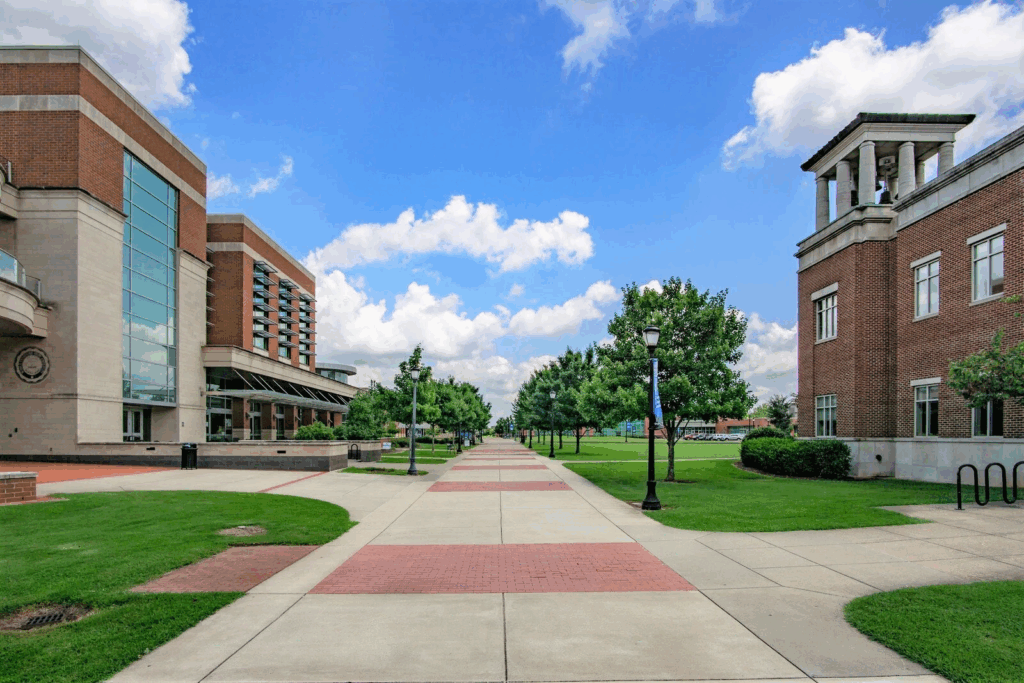
MTSU grew too. From about 16,000 students in 1990 to over 21,000 today. It became a legitimate mid-sized university, not just a regional state school.
What It Is Now
Today, Murfreesboro is Tennessee’s fastest-growing major city and the sixth-largest city in the state. It’s a weird hybrid:
- College town (MTSU dominates)
- Bedroom community (Nashville commuters)
- Regional hub (serves surrounding rural counties)
- Industrial/logistics center (Amazon, distribution)
- Historic town square (the old Murfreesboro trying to hold on)
It has:
- The Avenue Murfreesboro (big outdoor mall)
- Multiple hospital systems
- Decent restaurants and breweries (not Nashville level but improving)
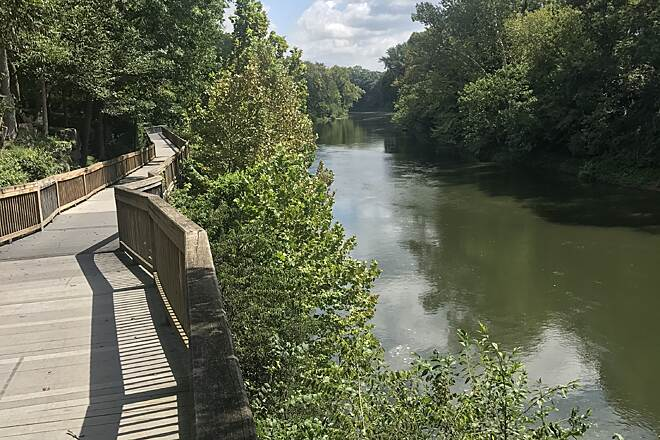
- Stones River Greenway (nice trail system along the river)
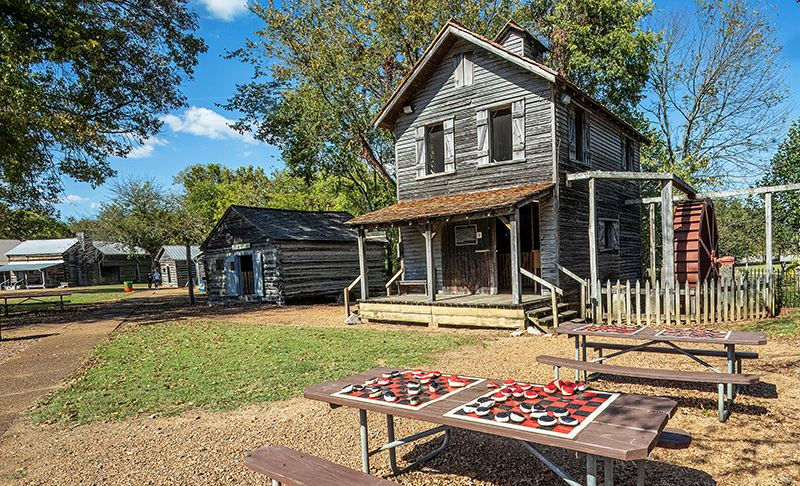
- Cannonsburgh Village (historic preservation)
- Bradley Academy Museum (Black history and culture)
- Growing arts scene
- Youth sports complexes that draw regional tournaments
It’s not Nashville. It’s not trying to be. But it’s also not the small town it used to be. It’s caught in between—too big to be small, too small to have all the amenities of a major city, growing too fast to maintain its character.
The Problems Nobody Wants To Talk About
Traffic is terrible. I-24, Medical Center Parkway, Memorial Boulevard, Church Street—all of it congested. The city has grown faster than the road infrastructure. Sitting in traffic in Murfreesboro when you’re supposedly living here to avoid Nashville traffic is its own special irony.
Schools are overcrowded. Rutherford County Schools is one of the largest districts in Tennessee. Over 48,000 students. They’re building schools constantly and still can’t keep up. Class sizes are large. Rezoning is constant. Parents are frustrated.
Inequality is real. The growth has benefited some people—developers, property owners, and businesses. It’s been hard on others—service workers, renters, longtime residents on fixed incomes. The city is increasingly divided between haves and have-nots.
Sprawl is ugly. The endless subdivisions. The strip malls. The chain restaurants. The generic development could be anywhere in America. Murfreesboro is losing its distinctiveness to generic sprawl.
Crime has increased with growth. More people means more crime. Property crime, drug issues, and gang activity are creeping in from Nashville. It’s not dangerous compared to major cities, but it’s not the safe small town it used to be.
What You’re Losing or Leaving
If this is your home, you’re losing:
- MTSU football games at Floyd Stadium
- The square with its shops and restaurants
- Stones River Greenway for walking or biking
- The convenience of being close to Nashville without being in Nashville
- Community (if you’ve been here long enough to have one)
- Schools your kids know
- The familiar
If you’re moving on, you’re leaving behind a city that grew too fast, that priced you out, that promised affordability and delivered stress.
Either way, it’s a loss. Acknowledge it. Grieve it if you need to. Then make the decision that’s right for your future.

What You Actually Need To Do Right Now
Stop reading and start acting. Here’s your actual next step:
If You Want to Talk to Us
Tell us:
- Where in Murfreesboro is your house?
- What condition is it in?
- What do you owe versus what you think it’s worth?
- How much time do you have before the foreclosure sale?
- What’s important to you in how this resolves?
We’ll have a real conversation. No pressure. No sales pitch. Just an honest discussion about whether we can help.
What Happens Next
Within a few hours: We respond to your contact. We set up a time to talk or a time to see the house.
Within 24-48 hours of seeing the house: We make you a written offer. This is what we’ll pay, as-is, with us covering closing costs.
You take whatever time you need: Think about it. Talk to family. Compare to other options. Pray about it. Sleep on it. Make the decision that’s right for you.
If you accept: We handle everything. All the paperwork, all the complexity, all the closing details. You just show up to sign papers and hand over keys.
You move forward: Without foreclosure on your credit. Without the stress. Without the uncertainty. This chapter is closed.
If You Want to Explore Other Options First
That’s completely fine. We’re not your only option. We’re just an option.
If you have time and equity, a traditional sale might work. Try it.
If your lender is cooperative, loan modification might work. Try it.
If you need to talk to a lawyer about your specific situation, do it.
We’ll still be here if those don’t work out.
The Only Wrong Choice Is No Choice
The only mistake you can make right now is doing nothing. Hoping it goes away. Avoiding the situation.
The foreclosure process doesn’t pause while you figure things out. Every day you wait is a day closer to the auction. Every week you avoid the situation is a week less you have to solve it.
Act now. Any action is better than no action. Any decision is better than paralysis.
You’re Going to Be Okay
Here’s what you need to hear: Losing this house doesn’t define you. It doesn’t mean you failed. It doesn’t mean you’re irresponsible or bad with money or weak.
It means you’re dealing with impossible circumstances in a city that grew too fast, where costs increased faster than wages, where the math stopped working for regular working people.
Thousands of people in Murfreesboro are struggling with the same things. They’re just not talking about it because everyone pretends they’re fine.
You’re not fine right now. That’s okay. You don’t have to be fine. You just have to take the next step.
People recover from this. People lose houses and rebuild their credit and their lives. People find new places to live that work better for them. People move on.
You will too.
Maybe you stay in Murfreesboro and downsize to something affordable. Maybe you move to a smaller Tennessee city where costs are lower. Maybe you move closer to family. Maybe you move to Nashville and deal with the higher rent because at least you’re not commuting two hours a day.
Whatever comes next, it starts with dealing with this. When making a decision. By taking action.
We’re here to help if that’s what you want. No judgment. No pressure. Just a possible solution to an impossible problem.
Frequently Asked Questions
Will this affect my ability to work at MTSU or in education?
Foreclosure is a public record, but it doesn’t usually affect employment unless you’re in a job requiring financial clearance. Selling before foreclosure is always better for employment purposes.
What if I’m a student at MTSU and I bought a house?
We work with student buyers who overestimated their ability to handle a mortgage while in school. We can help.
What if I’m renting the house to students and they’re not paying?
We buy rental properties with tenant issues all the time. We can deal with the tenants as part of the purchase.
Does it matter that I’m underwater because I bought during the boom?
No. We can do short sales. We work with lenders regularly on this.
What if the house is in one of the new subdivisions with HOA issues?
We buy in subdivisions with HOA problems. Doesn’t matter to us.
I commute to Nashville—should I just move there instead?
That’s a personal decision. If selling lets you move closer to work and improve your quality of life, that might be the right choice.
What if the house needs major repairs I can’t afford?
We buy as-is. Condition doesn’t matter. New roof, foundation, HVAC, whatever—we’ll buy it in its current condition.
How fast can you close?
As fast as 7 days if you need it. Or a few weeks if you need time. Your timeline.
Do you buy in all Murfreesboro areas?
Yes. Near MTSU, near the square, Medical Center Parkway area, new subdivisions, county areas, all of it.
What if I already have a foreclosure sale date?
Contact us immediately. We might still be able to help if we move fast.
Make the Call
You’ve read this far. You know your options. You know we can help.
The only question left is: are you ready to take action?
Fill out the form. Make the call. Start the conversation.
You’re going to be okay. Let’s figure this out together.
Titan Property Investors
Your trusted partner in real estate
Address
731 S. 7th St.
Heber Springs, AR 72543
Phone
Send us a message
We’d love to hear from you. Fill out the form below.