Pre-Foreclosure Help in Johnson City, Tennessee
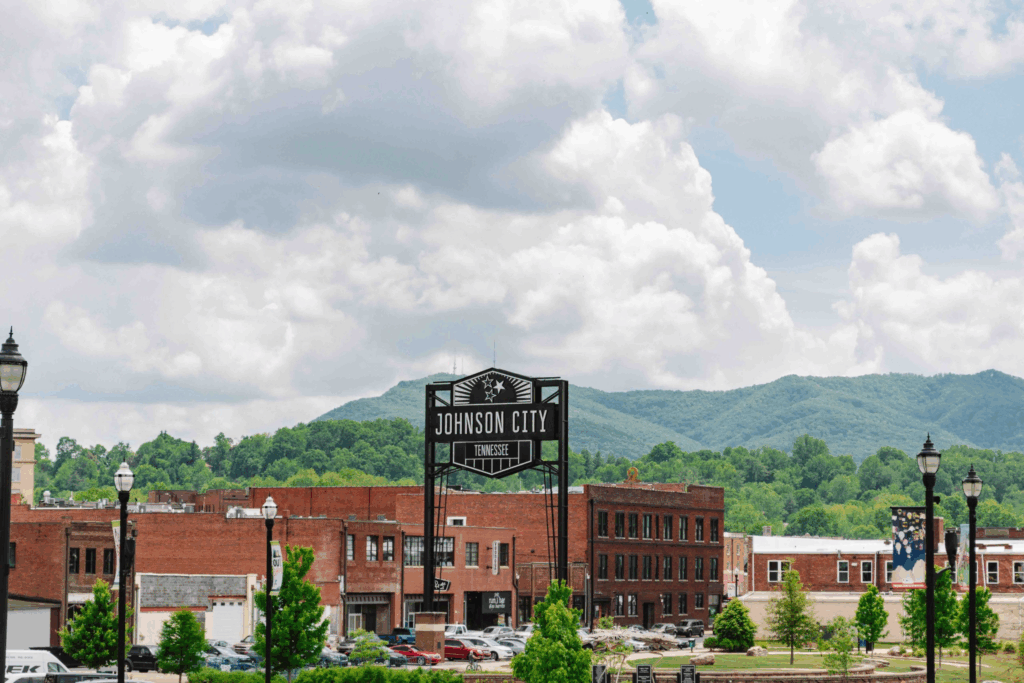
The Appalachian City That Almost Made It
Johnson City sits in the Tri-Cities region of Northeast Tennessee—part of a metro area with Kingsport and Bristol that together form one of the larger population centers in Appalachia. Surrounded by mountains, close to the Virginia and North Carolina borders, with a history tied to railroads, tobacco, and Appalachian culture.
For years, Johnson City was the scrappy underdog of the Tri-Cities. Not as industrial as Kingsport (Eastman Chemical). Not split between two states with NASCAR heritage like Bristol. Just Johnson City—home to East Tennessee State University, a regional medical center, and a downtown that was mostly empty storefronts until the 2000s when revitalization started happening.
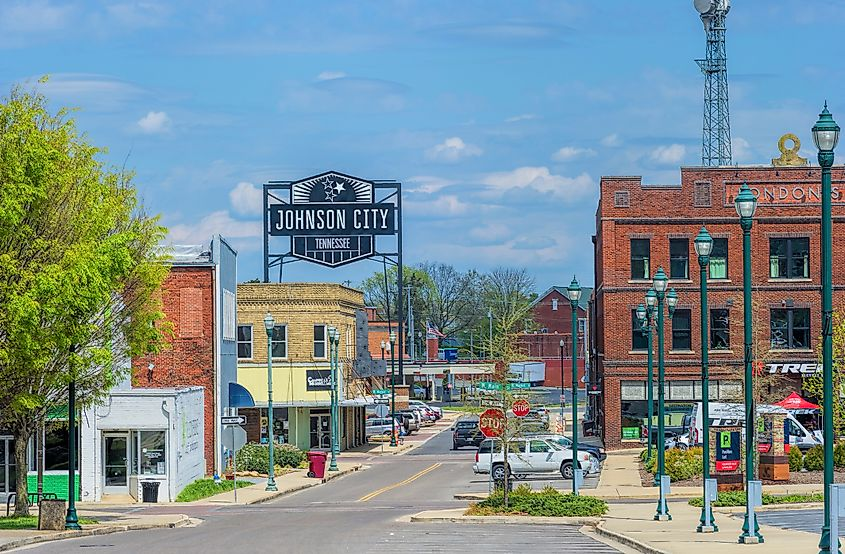
Then something changed. Downtown came back to life—local breweries, restaurants, music venues, and art galleries. The Founders Park development. ETSU grew and invested. Mountain biking trails started drawing tourists. Johnson City started getting recognized as an up-and-coming small city with Appalachian character and outdoor recreation access.
It started feeling like Johnson City might actually make it—might become one of those small cities that successfully reinvents itself for the 21st century while keeping its soul.
But here’s the thing about “up-and-coming” cities: not everyone benefits from the coming up. The craft breweries and cute downtown shops don’t pay the rent for working-class families. The recognition in travel magazines doesn’t create middle-class jobs. Mountain biking tourism doesn’t help healthcare workers or retail employees afford housing.
If you’re facing foreclosure in Johnson City, you’re probably dealing with this disconnect. The city is supposed to be improving, but your personal economic situation isn’t improving with it. Maybe you work at the hospital or one of the call centers or retail and your wages haven’t kept pace with costs. Maybe you’re tied to coal or manufacturing jobs that are disappearing from the region. Maybe you’re retired on a fixed income while property taxes climb. Maybe you bought thinking Johnson City was affordable and discovered it’s not as cheap as you thought.
You’re in pre-foreclosure, which means you still have control. The bank hasn’t taken your house yet. You still have time to make decisions about how this ends.
Let’s talk about what those options are in Johnson City’s specific context—an Appalachian city with limited market, slow sales, but also strong community ties and lower prices than Knoxville or Chattanooga.
Understanding Johnson City’s Complicated Market
Johnson City is neither booming nor dying. It’s somewhere in the middle—slowly improving in some ways, still struggling in others. This creates a housing market with specific challenges and opportunities.
The Tri-Cities Regional Dynamic
Johnson City isn’t economically independent. It’s part of a three-city region (with Kingsport and Bristol) that together form a metro of about 500,000 people. This means:
Job markets overlap. People live in Johnson City and work in Kingsport or vice versa. Employment in one city affects housing demand in the others. When Eastman Chemical in Kingsport does well, Johnson City benefits. When it struggles, Johnson City feels it.
Housing markets compete. Buyers choose between Johnson City, Kingsport, and Bristol based on jobs, schools, and preferences. Your Johnson City house is competing with similar houses in other cities. This limits your buyer pool.
Economic fate is shared. When the regional economy is good, all three cities do okay. When it’s bad, all three struggle. Right now it’s mixed—some sectors growing (healthcare, education, some manufacturing), others declining (coal, tobacco, traditional manufacturing).
The ETSU Stabilization Effect
East Tennessee State University has about 14,000 students. It’s a regional comprehensive university—not huge like UT Knoxville, but substantial for a city of 70,000.
ETSU provides economic stability:
- Constant employment (faculty, staff, administration)
- Student housing demand
- Cultural events and amenities
- Medical school and teaching hospital (Quillen College of Medicine)
- Steady influx of young people
But it’s not a cure-all:
- Many students leave after graduation (brain drain)
- The student housing market is saturated
- University employment doesn’t pay high wages for most positions
- Economic impact is real but limited
For your foreclosure situation: If your house is near campus, the student rental market might be an option. If you work at ETSU, you have stable employment but maybe not a high salary.
The Healthcare Economy
Ballad Health (formerly Wellmont and Mountain States) is the dominant healthcare system. It’s the largest employer in the region. Thousands of people work in healthcare—Johnson City Medical Center, Niswonger Children’s Hospital, clinics, nursing homes, and home health.
Healthcare provides jobs but not wealth:
- CNAs, techs, and support staff make $12-15/hour
- RNs make decent money but often have crushing student debt
- Administrative and clerical staff make modest wages
- Doctors and executives do well, but they’re a tiny percentage
If you work in healthcare and you’re struggling with your mortgage, you’re not alone. Most healthcare workers are working-class or middle-class, stretched thin by costs that have risen faster than wages.
The Appalachian Economic Shadow
Johnson City sits in Appalachia—a region with beautiful mountains and deep culture, but also generational poverty, limited economic opportunity, and industries in decline.
Coal mining, which once provided good jobs is dying. People whose families worked in mines for generations are scrambling to find new work that pays a fraction of what coal paid.
Tobacco farming which was the economic backbone, is mostly gone. Small farmers who grow tobacco can’t make enough from other crops.
Traditional manufacturing has been leaving or automating. The good factory jobs that built the middle class are fewer and pay less.
This creates downward pressure on wages. When people from struggling rural areas around Johnson City are willing to work for less because they’re desperate, everyone’s wages get pushed down.
You’re not just competing in Johnson City’s economy. You’re competing in Appalachia’s economy, where poverty is structural and opportunities are limited.
The Mountain Housing Premium
Johnson City is beautiful. Surrounded by mountains. Cherokee National Forest is nearby. Outdoor recreation everywhere. Quality of life is genuinely good if you can afford to enjoy it.
This creates a housing premium: People want to live here for the mountains and lifestyle. Retirees move here. Remote workers discover it. Demand exists for nice properties in good locations.
But it also creates a problem: Much of the housing stock is old. Lots of houses built in the 1950s-1970s that need updates. Maintenance is expensive in a mountain climate—moisture, foundation issues on slopes, and heating costs in winter. The premium you pay for a mountain location doesn’t always reflect the condition of the house.
For your situation: If you have a nice house in a good location, equity might exist. If you have an older house needing work in a less desirable area, equity might be limited and a traditional sale might be hard.
The North versus South Johnson City Divide
Johnson City has geographic and economic divides that matter for housing:
North Johnson City / Indian Trail area: More affluent. Nicer neighborhoods. Science Hill High School zone. Where professionals and ETSU faculty tend to live.
Downtown and adjacent neighborhoods: Revitalizing. Some areas are gentrifying. Mix of students, young professionals, longtime residents. Varied conditions.
South Johnson City: More working-class. Older housing stock. More economic diversity. Some areas are struggling.
Gray area (between Johnson City and Kingsport): Suburban sprawl. Mix of conditions. Newer developments and older properties.
Where you are dramatically affects your options, your equity, your timeline.
The Weight You’re Carrying
Let’s talk about what you’re actually feeling, because foreclosure in Appalachia has specific emotional dimensions.
The Appalachian Shame
There’s a specific shame that comes with financial struggle in Appalachia. The region already gets looked down on by the rest of the country—stereotypes about poverty, lack of education, and backwardness. When you’re from here, you’re aware of those stereotypes even if you don’t talk about them.
Facing foreclosure feels like confirming those stereotypes. Like proving that Appalachians can’t manage money, can’t succeed, are stuck in poverty by their own failings.
The truth is completely different: Appalachia has been economically exploited for over a century. Coal companies extracted wealth and left nothing behind. Factories came, took advantage of cheap labor, then left. The region has been used and discarded repeatedly. Your personal financial struggle is part of a much larger economic pattern.
You’re not confirming stereotypes. You’re dealing with systemic economic failure that’s been generations in the making.
The Family Land Connection
In Appalachia, land and family are deeply connected. Maybe your house is on family land that’s been in your family for generations. Maybe your grandparents homesteaded it. Maybe it’s the place where family gatherings happen, where your identity is rooted.
Losing that land to foreclosure isn’t just losing a house. It’s severing connection to family history, to place, to identity.
The grief is profound and legitimate. This isn’t just real estate. This is where your people are from. Where you from. Losing it feels like losing who you are.
The “Should Have Left” Guilt
If you grew up in the Tri-Cities, you probably had teachers and guidance counselors who encouraged you to leave—go to college elsewhere, find opportunities in bigger cities, get out of Appalachia where economic futures are limited.
Some people left. Some came back. Some never left.
If you stayed or came back and now you’re struggling, you might feel stupid. Like you made the wrong choice. Like you should have listened and left when you could.
But here’s the truth: Not everyone can or should leave. Family ties are real. Community is real. Not everyone fits in big cities. Some people need mountains and small-town life to be themselves. The cost of living elsewhere is often higher even if wages are higher.
You’re not stupid for staying in or returning to Appalachia. You’re dealing with an economy that doesn’t support people who want to stay in their home regions.
The Healthcare Worker Exploitation
So many Johnson City residents work in healthcare—at Ballad Health, at nursing homes, in home health, in clinics. You’re keeping people alive, providing essential care, and doing work that matters.
And you’re paid terribly for it. CNAs make $13/hour to lift patients and clean waste. Med techs making $15/hour. Home health aides make minimum wage plus mileage. Even RNs, who make decent money, are drowning in debt from nursing school.
The work is physically and emotionally exhausting. You’re on your feet for 12-hour shifts. You’re dealing with death and suffering. You’re understaffed. You’re carrying emotional weight that never fully goes away.
COVID made it exponentially worse. The trauma of those years lingers. The community’s hostility toward healthcare workers. The deaths. The impossible working conditions. Many healthcare workers have PTSD and can’t afford therapy to process it.
If you work in healthcare and you can’t afford your mortgage, that’s not personal failure. That’s systemic failure to compensate essential workers fairly.
The Retirement Fixed-Income Crisis
Johnson City has a significant retiree population—people who worked their whole lives, retired thinking they’d be secure, and are discovering Social Security and small pensions don’t cover costs anymore.
Property taxes increase. Even though Johnson City housing is cheaper than Nashville, the tax burden feels heavy when your income is $1,800/month from Social Security.
Healthcare costs are crushing. Medicare doesn’t cover everything. Supplemental insurance is expensive. Prescriptions are expensive. Co-pays add up. Medical costs eat hundreds of dollars monthly.
Home maintenance is expensive. Older houses need constant repairs. Heating in winter. Cooling in summer. Things break. You can’t do the work yourself anymore because you’re 75 years old.
One unexpected expense—$1,000 for furnace repair—and you miss a mortgage payment. Miss two and you’re in default.
You worked your whole life. You’re not irresponsible. The cost of living has increased while fixed incomes haven’t kept pace. That’s not your fault.
The Student Debt Medical Field Trap
Johnson City trains healthcare workers—ETSU has nursing programs, allied health programs, and a medical school. Many local people go to ETSU or other schools to become nurses, respiratory therapists, or medical technologists.
You graduate with $40,000-60,000 in student debt. For a BSN nursing degree or similar. That’s $400-600/month in loan payments for ten years or more.
You’re making $55,000-65,000 as an RN. That’s decent money in Johnson City. But after taxes, student loans, health insurance, and normal expenses, there’s not much margin.
You bought a modest house thinking you could afford it on your nursing salary. But student loans plus mortgage plus life costs equals constant financial stress.
Add kids, or medical issues, or divorce, or anything unexpected—and suddenly you’re behind on the mortgage.
You did everything “right”—went to school, got credentials, worked hard at an essential job. And you’re still struggling financially. That’s not you failing. That’s the system failing.
The Call Center Precarity
Johnson City has several call centers—customer service operations for various companies. They employ hundreds of people. They’re always hiring because turnover is constant.
The work is soul-crushing. Sitting in a cubicle wearing a headset getting yelled at by customers all day. Strict metrics. Monitored bathroom breaks. Constant pressure.
Pay is $12-14/hour. Maybe $15 if you’ve been there forever. That’s $25,000-30,000 per year. You can’t buy a house on that. You can barely afford rent.
Hours fluctuate. Some weeks you get overtime. Other weeks they cut hours. You can’t budget because you never know what your paycheck will be.
Benefits are minimal. Health insurance with high deductibles that you can’t afford to use.
If you work call center and you’re behind on your mortgage, you’re not irresponsible. You’re trying to survive on wages that haven’t kept pace with costs while doing work that breaks your spirit.
The Appalachian Identity Weight
There are aspects of living in Appalachia that shape your foreclosure experience in ways people from other regions can’t fully grasp.
The Family Land Sacred Trust
In Appalachia, land isn’t just real estate. Its identity. It’s a connection to ancestors. It’s where your people are from.
Maybe your house sits on land that’s been in your family since the 1800s. Maybe your great-great-grandfather homesteaded it. Maybe it’s where generations were born and died. Maybe the family cemetery is on this land. Maybe this is where family reunions happen, where the old stories get told, where you teach your kids who they are and where they come from.
Losing this land to foreclosure isn’t just a financial transaction. It’s severing the bloodline connection to the place. It’s breaking sacred trust with ancestors who fought to hold onto this land through the Civil War, the Depression, and every hardship. It’s failing to pass it to your children like it was passed to you.
The grief is profound. The shame is crushing. How do you tell your grandmother that the family land she grew up on, that her parents left her, that she left you, you couldn’t keep it? How do you face that?
Here’s what you need to hear: Your ancestors would want you to survive. They would want you financially stable more than they’d want you sacrificing everything for land. They knew hard times. They made impossible choices. They would understand.
Honoring their memory doesn’t require destroying yourself trying to hold onto property in an economy that’s rigged against working people. Sometimes love means letting go.
The Coal Economy Grief
If you or your family worked in coal—and many Tri-Cities families did, even if the mines were in Virginia or Kentucky—you’re dealing with specific grief.
Coal mining was hard, dangerous work. Men died in mines. Others got black lung and died slowly. But it was also good work—union jobs paying $60,000-80,000 per year with benefits. A miner could support a family, buy a house, and send kids to college. Coal built the middle class in Appalachia.
That’s gone now. The mines are closing. The jobs are disappearing. The men who worked coal their whole lives are in their 50s and 60s, too young to retire, too old to start over, with no jobs that pay anything close to what coal paid.
If you worked in coal and you’re facing foreclosure because the industry died, that’s not your fault. You didn’t kill coal. Market forces and politics and technology killed coal. You’re collateral damage.
The house you bought with coal money can’t be maintained on Walmart money. That’s not personal failure. That’s economic displacement.
The Brain Drain You’re Living In
You watch your kids grow up. You’re proud of them. They’re smart, ambitious, and hardworking. They go to college—maybe ETSU, maybe somewhere else.
Then they graduate and they leave. They move to Raleigh or Charlotte or Atlanta or Nashville or somewhere with opportunities. Because Johnson City doesn’t have jobs for what they studied. Because they can’t build the careers they want here. Because the wages here won’t support the life they envision.
You’re happy for them. You want them to succeed. But you’re also heartbroken because your kids are leaving, your family is scattering, the next generation is abandoning the place your family has been for generations.
And when you’re facing foreclosure, part of you wonders: Should I have left too? Should I leave now? Am I stupid for staying in a place the young people flee?
The truth: Not everyone can or should leave. Elderly parents need care. Family land needs tending. Community connections matter. Not everyone fits in cities. Some people need mountains and small-town life to be themselves.
You’re not stupid for staying. You’re dealing with economic forces that make it nearly impossible to stay in home regions while maintaining middle-class security. That’s not individual failure. That’s systemic failure.
The Appalachian Stereotypes You Carry
You’re aware—even if you don’t talk about it—that the rest of America looks down on Appalachia. The stereotypes: poor, uneducated, backward, lazy, drug-addicted, the butt of hillbilly jokes.
Movies and TV shows use Appalachian accents as shorthand for stupid. Politicians talk about Appalachia as a problem to be solved. Outsiders come to document poverty like you’re zoo animals.
When you’re facing foreclosure, those stereotypes echo in your head. You feel like you’re confirming what they think about Appalachian people. Like you’re proof that the stereotypes are true.
But the stereotypes are lies. Appalachian people are hardworking, resilient, creative, loyal, and tough as nails. The poverty in this region isn’t because people are lazy or stupid. It’s because the region has been economically exploited for over a century.
Coal companies extracted billions in wealth and left devastation. Timber companies clear-cut forests. Corporations came for cheap labor then left. Politicians in state capitals and Washington DC made policies benefiting outside interests over local communities.
Your foreclosure isn’t confirmation of stereotypes. It’s evidence of an economic system that extracts from Appalachia without giving back.
The Medical Debt Crushing Working Families
Healthcare workers in Johnson City see this constantly: working families bankrupted by medical bills even when they have insurance.
Cancer treatment: $100,000-300,000 after insurance. Heart surgery: $50,000-100,000. Chronic illness requiring ongoing treatment: thousands per year indefinitely. Accident requiring surgery and rehab: $50,000+.
The American healthcare system is designed to bankrupt regular people. Even “good” insurance has deductibles of $5,000-10,000, out-of-pocket maximums of $15,000, and things they don’t cover at all.
If you or a family member got seriously ill or injured and medical debt pushed you into foreclosure, that’s not irresponsibility. That’s America’s broken healthcare system destroying families financially like it does every single day.
The Opioid Crisis Shadow
The opioid epidemic hit Appalachia harder than most regions. Johnson City and Tri-Cities weren’t spared. Families have been destroyed. People have died. The living carry the damage.
Maybe you’re in recovery. Maybe you lost years to addiction. Maybe your spouse or child is struggling. Maybe you’re raising grandchildren because their parents can’t. Maybe the medical bills from overdoses or treatment buried you. Maybe the lost wages from years out of the workforce put you behind.
Addiction is a disease, not a moral failure. The opioid epidemic was created by pharmaceutical companies, enabled by doctors, and exploited for profit. People in economic despair and physical pain were targeted systematically.
If addiction—yours or a family member’s—contributed to your foreclosure, that’s not a character flaw. That’s one of many ways Appalachia has been exploited and harmed.
The Pride That Makes Asking For Help Impossible
Appalachian culture values independence, self-reliance, and taking care of your own. These are good values. They helped people survive in the hard mountains with limited resources.
But these values also make it nearly impossible to ask for help when you’re drowning.
You’re supposed to handle your own problems. Asking for help feels like admitting weakness. Like burdening others. Like failing at the fundamental Appalachian value of taking care of yourself and yours.
So you suffer in silence. You avoid talking about foreclosure. You hide your struggle. You feel isolated and ashamed when you should feel supported and understood.
Here’s the truth: Asking for help isn’t a weakness. Recognizing when a situation is beyond your individual capacity to solve isn’t failure. Community and mutual aid are also Appalachian values. People helped each other survive in these mountains for generations.
Reaching out—whether to us, to family, to social services, to church, to anyone—is strength, not weakness.
How Foreclosure Works in Tennessee
The legal process is the same throughout Tennessee, but the practical experience differs in Johnson City’s market.
The Standard Tennessee Timeline
Months 1-3: You miss payments. Letters arrive. Calls come. Lender sends default notices.
Month 3-4: Formal Notice of Sale. Tennessee requires a minimum of 20 days before auction. Sent certified mail and published in the local newspaper—the Johnson City Press.
Publication in Small City: Johnson City has about 70,000 people. It’s small enough that people might see the foreclosure notice. The shame is real in a place where connections matter and word spreads.
The Sale: Auction at Washington County Courthouse downtown. Public. Usually Tuesday morning. Highest bidder wins.
After Sale: You must vacate. Tennessee has limited redemption rights. Once sold, it’s sold.
Deficiency Judgments: Tennessee allows them. If the house sells for less than owed, lender can sue for the difference. In Johnson City’s slower market, this is real risk.
The Johnson City Market Reality
Houses don’t sell as fast as Knoxville or Nashville. Johnson City’s market is slower. Fewer buyers. Properties sit longer.
This makes avoiding foreclosure even more important. Your house at auction might sell for significantly less than market value, leaving you owing the difference.
Selling yourself—even for less than you hoped—is almost always better than foreclosure auction.
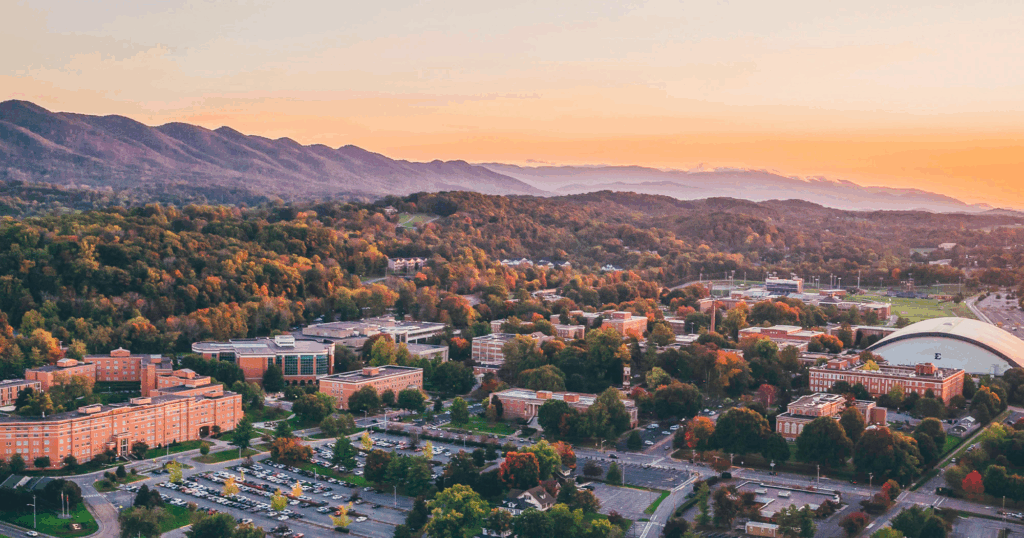
Johnson City Neighborhoods: Where You Are Matters
Your location dramatically affects your options.
North Johnson City / Indian Trail Area
Nicer neighborhoods. Science Hill High School zone. Where professionals, ETSU faculty, successful business owners live. Larger homes. Better maintained.
Market: Best in Johnson City. These houses sell relatively well. Still slower than Knoxville but movement happens.
Your Situation: If you’re here, you likely have equity. Traditional sale might work if you have time. These properties have value.
Downtown and Adjacent Neighborhoods
Mix of revitalized and struggling. Some streets gentrifying with young professionals and renovated historic homes. Other streets still rough with neglected properties.
Market: Varied. Nice properties near downtown sell. Properties needing work or in rougher pockets struggle.
Your Situation: Depends on specific location and condition. Some houses have equity and sell. Others are challenging.
Tree Streets
Historic neighborhoods near downtown. Mix of beautiful historic homes and properties needing work. Some owner-occupied. Some rentals. Some student housing.
Market: Very property-specific. Updated historic homes sell. Run-down rentals don’t.
Your Situation: If your house is nice, traditional sale possible. If it needs work, cash buyer might be better option.
South Johnson City
More working-class. Older housing stock. More economically diverse. Some areas stable, others struggling.
Market: Challenging. Buyers are scarce. Houses sit. Prices are lower.
Your Situation: Traditional sale might take forever. Limited buyer pool. Cash buyer probably better option.
Gray / Boones Creek Area
Suburban area between Johnson City and Kingsport. Mix of newer subdivisions and older properties.
Market: Depends on specific neighborhood and school zone. Some areas sell okay. Others slow.
Your Situation: Property-specific. Newer developments in good school zones have market. Older areas more challenging.
Rural Washington County
Outside city limits. More land. Mountain properties. Very varied.
Market: Small buyer pool. Properties can sit for months or years. Very specific buyer needs.
Your Situation: Traditional sale uncertain timeline. Cash buyer might be only realistic option depending on property.
Your Real Options
Let’s talk about actual solutions specific to Johnson City.
Option 1: Catch Up Completely
If money appears, pay what you owe. Problem solved. This rarely happens. Moving on.
Option 2: Loan Modification
Contact lender. Request modification—lower rate, extended term, forbearance.
Johnson City Reality: Lenders know market is weak. Might be slightly more willing to work with you than in hot markets. But no guarantees. Process is slow and uncertain.
Worth trying. But don’t wait months for answer that might be no.
Option 3: Traditional Sale
List with realtor. Price competitively. Market it. Wait for buyers.
This works if:
- House is in decent area and condition
- You have 60-90+ days minimum (probably longer in Johnson City)
- You can afford to wait (carrying costs while listed)
- You’re emotionally capable of showings and process
Challenges:
- Johnson City market is slow—houses sit 2-4 months or longer
- Buyers are picky and price-sensitive
- Financing falls through more often
- Timeline unpredictable
Costs:
- 5-6% commission on $150K house is $7,500-9,000
- Closing costs $3,000-4,500
- Repairs buyers require
- Carrying costs during listing period
If you’re in good area with time and decent house, worth considering. Otherwise probably not realistic.
Option 4: Short Sale
If you owe more than house is worth, short sale might be necessary. We can help. We’ve done short sales in Johnson City and Tri-Cities. Process takes months. Requires patient buyer. But it’s better than foreclosure.
Option 5: Sell to Us for Cash
This is where we provide solution for Johnson City’s specific market challenges.
When selling to us makes sense:
- Time is short (foreclosure approaching)
- House needs repairs you can’t afford
- Market is slow and you can’t wait months
- You’re in area where traditional buyers are scarce
- You need certainty over theoretical maximum price
- You’re exhausted and overwhelmed
How it works:
- Contact us
- Discuss situation and timeline
- We see property (or virtual tour)
- Written cash offer within 24-48 hours
- You decide if it works
- We handle all closing details
- Close on your timeline—7-10 days if urgent, longer if needed
What you get:
- Certainty—no deal falling through
- Speed—fast when needed
- No repairs—as-is purchase
- No commissions or fees
- No months of showings and uncertainty
What’s the trade-off:
- Our offer accounts for repairs, holding costs, market risk, and our profit
- Lower than theoretical perfect-market price
- But that perfect price assumes perfect buyer and perfect conditions in Johnson City’s slow market—big IF
For many people facing foreclosure in Johnson City, we’re the realistic option that actually works.

Real Stories From Johnson City Homeowners
Actual situations we’ve handled:
“Worked in coal industry my whole life. Industry died. I’m 58 years old and nobody’s hiring. Behind on mortgage. You bought my house so I could move in with my daughter’s family in Knoxville.”
“I’m a CNA at nursing home making $13/hour. Husband got injured and can’t work anymore. We fell behind. You bought our house quickly so we could move into apartment we can afford.”
“Inherited my parents’ house on family land. Still had mortgage. I live in Charlotte. Couldn’t afford to keep it. Listed with realtor—sat for six months. You bought it as-is.”
“Retired teacher. Property taxes tripled in ten years. Social Security didn’t triple. Selling to you let me move into senior housing I can afford.”
“House needed $40,000 in repairs—roof, foundation, HVAC. Living on disability. Don’t have that kind of money. You bought it in current condition.”
“Medical bills from heart surgery—$70,000 after insurance. Trying to pay that plus mortgage was impossible. Selling to you gave us fresh start.”
“Student loans from nursing school plus mortgage was too much. Making decent money as RN but $500/month in loans killed us. You helped us sell and downsize.”
Different situations. Same outcome: moving forward instead of staying trapped.
What Johnson City Actually Is
Understanding the city helps you process whatever decision you make.
The History
Founded in 1856 when railroad came through. Named after Henry Johnson who donated land. Grew as railroad junction and regional commercial center for Northeast Tennessee.
Became significant tobacco market—burley tobacco grown throughout region brought to Johnson City for auction and processing. Manufacturing developed—textiles, various industries. ETSU (founded as teachers college in 1911) provided education and culture.
For most of its history, Johnson City was scrappy regional city in Appalachian mountains. Not wealthy but not destitute. Working-class and middle-class. Stable if not spectacular.
The Present
Today Johnson City has about 70,000 people (500,000 in Tri-Cities metro). It’s changed significantly:
What’s improved:
- Downtown revitalization with breweries, restaurants, venues
- ETSU growing and investing (14,000 students)
- Medical school and expanded healthcare
- Mountain biking trails and outdoor recreation recognition
- Arts and music scene developing
- Founders Park development
- Recognition as “up-and-coming” small city
What’s still challenging:
- Poverty rate around 20%
- Wages lower than state and national averages
- Manufacturing decline continues
- Coal economy dying
- Brain drain—young people leaving
- Limited high-wage employment
- Appalachian economic challenges persist
Johnson City is improving in some ways but that improvement hasn’t lifted everyone. The craft breweries and downtown development benefit some people. For working-class families, not much has changed. Costs have increased without wages keeping pace.
The Appalachian Context
Johnson City is fundamentally Appalachian city. That means:
- Beautiful mountains and outdoor access
- Deep sense of place and community
- Strong cultural identity
- But also limited economic opportunity
- Generational poverty in surrounding areas
- Industries in decline (coal, tobacco, manufacturing)
- Brain drain as educated young people leave
This context shapes everything about living here including your housing struggles.

What You Need To Do Now
Stop reading. Start acting.
Contact Us
Tell us:
- Where is your house?
- What condition?
- What you owe vs. what you think it’s worth?
- Timeline to foreclosure?
- What matters most to you?
What Happens Next
Quick response. Real conversation. Property visit. Written offer within 24-48 hours. You decide. We handle everything if you accept.
The Only Wrong Choice Is No Choice
Doing nothing guarantees worst outcome. Any action is better than paralysis.
You’re Going To Be Okay
Whether you stay in Johnson City or leave, whether you keep this house or let it go, you’re going to be okay.
This situation doesn’t define you. Appalachia’s economic struggles aren’t your fault. Wage stagnation isn’t your fault. Healthcare worker exploitation isn’t your fault. The death of coal and manufacturing isn’t your fault.
You’re dealing with systemic problems generations in the making.
Losing this house might hurt. It might feel like losing connection to place and family. That grief is real.
But people survive this. People move on. People rebuild. You will too.
Maybe you stay in Johnson City in more affordable housing. Maybe you move to Knoxville or Nashville for opportunities. Maybe you move to family land in the country. Maybe you leave Appalachia entirely.
Whatever comes next starts with dealing with this. With being honest. With taking action.
We’re here to help if you want help. No judgment. No pressure. Just a possible path forward through impossible situation.
Frequently Asked Questions
Will this affect my job at Ballad Health or ETSU?
Foreclosure is generally a private financial matter that doesn’t affect employment unless your job specifically requires financial clearance or security screening (which most healthcare and education positions don’t). Your employer won’t be notified, and it shouldn’t impact your job security. If you work in a position that does require periodic background checks, a foreclosure will show up, but it rarely results in termination—employers understand that financial hardship happens. The bigger concern is usually the emotional toll of financial stress affecting your work performance, which is why addressing the situation proactively is important. Your job at the hospital, university, or anywhere else should be safe.
What if my house is on family land that’s been in our family for generations?
We understand how profound this is. Family land in Appalachia isn’t just property—it’s connection to ancestors, to place, to identity. It’s where your people are from. Maybe there’s a family cemetery on this land. Maybe it’s where reunions happen. Maybe you promised your grandmother you’d keep it.
Here’s what we want you to know: We treat family land with respect. We understand its significance. And we also understand that sometimes, letting go is the most loving thing you can do—for yourself, for your living family who need you to be financially stable, and even for honoring your ancestors who would want you to survive and thrive more than they’d want you to destroy yourself trying to hold onto property in an impossible economic situation.
If you sell to us, we’ll treat the property with dignity. If there’s a family cemetery, we’ll respect it and ensure ongoing access if that matters to you. We’ve worked with families dealing with this exact situation. We understand the grief. We won’t rush you or minimize what you’re losing. But we also won’t let you suffer indefinitely out of guilt. Sometimes honoring the past means making hard choices for the future.
Johnson City’s market is slow—can you really close in a week if I need to?
Yes. The difference between us and traditional buyers is that we buy with cash—no mortgage financing that takes 30-45 days and might fall through. We’re not waiting for bank approval or appraisals or any of the things that slow down normal sales. Once we agree on terms, we just need title work to make sure there are no liens or title issues, and we can close. In Johnson City, where the market is slower and houses often sit for months, this speed is particularly valuable. If your foreclosure sale is scheduled for three weeks from now, we can close in time to stop it. If you need longer because you’re figuring out where to move or need time to process this emotionally, we can accommodate that too. Your timeline, not ours.
What if my house needs major mountain-related repairs like foundation issues or moisture problems?
We buy as-is, and we’re very familiar with the challenges of mountain properties in this region. Foundation settling on sloped lots, moisture in basements, mold issues from humidity, drainage problems, heating system failures from hard winters—we’ve seen all of it and bought houses with all of it. You don’t have to fix anything. You don’t have to spend money you don’t have trying to get the house “sellable.” If your house needs a new roof, if the foundation is cracked, if there’s water intrusion, if the HVAC is shot, if there’s extensive deferred maintenance from years of not being able to afford repairs—none of that matters to us. We’ll assess the condition, factor repair costs into our offer, and buy it as it sits. Traditional buyers in Johnson City’s market won’t touch a house that needs significant work, which is why selling to us often makes sense for properties with issues.
My house is in rural Washington County, not in the city—will you still buy it?
Absolutely. We buy throughout the Tri-Cities region including rural Washington County, Sullivan County, Carter County, and surrounding areas. Whether your house is in downtown Johnson City, in Gray or Boones Creek, out in the county on acreage, or even across the line in Virginia or North Carolina—we work throughout the region. Rural properties can be harder to sell traditionally because the buyer pool is smaller and financing can be more difficult for rural properties, but we buy them regularly. If you’re on five acres or fifty acres, if you’re on a dirt road, if you’re in a holler, if you’re on a mountain—doesn’t matter to us.
What if I’m underwater because I bought during a better market or took out too much equity?
This is actually not uncommon in Johnson City where the market has been relatively flat or declining in some areas while other regions of Tennessee saw big appreciation. If you bought 5-10 years ago and owe more than the house is currently worth, or if you refinanced and took cash out that you used for medical bills or other necessities, we can still help through a short sale. A short sale is where your lender agrees to accept less than the full mortgage payoff. We have experience negotiating short sales with lenders, we know how to present your hardship case, and we know what documentation banks need. The process takes longer—usually 2-4 months—because we need lender approval, but it allows you to avoid foreclosure even when you’re underwater. We’ve done many short sales in the Tri-Cities region and can walk you through the process.
I inherited this house from my parents—is selling it betraying their memory?
This is a question we hear often, especially in Appalachia where family and land are so deeply connected. The short answer: No, selling an inherited house is not betraying your parents or their memory.
Your parents worked hard for that house. They took pride in it. They left it to you thinking it would help you, not hurt you. If keeping the house is destroying you financially—if you’re paying mortgage, taxes, and insurance on a house you can’t afford while also trying to support your own family—your parents would not want that. They loved you. They would want you financially stable and emotionally healthy more than they would want you sacrificing yourself for a building.
Honoring their memory doesn’t require keeping their physical property. It means remembering them, telling their stories to your children, living according to the values they taught you, taking care of your family the way they took care of theirs. Sometimes the most loving thing you can do is let go of the house so you can move forward with your life. Your parents would understand. They made hard choices too. They knew about impossible situations. They would want you to survive and thrive, not suffer out of misplaced guilt.
What if my whole family knows about the foreclosure and I’m ashamed to face them?
Family dynamics around foreclosure in Appalachian communities can be incredibly complex and painful. Maybe you’re the one who inherited the family land and you feel like you failed everyone. Maybe your extended family helped you buy the house and you feel like you’ve let them down. Maybe your parents co-signed and now their credit is at risk too. Maybe everyone at family reunions knows and you’re avoiding them because you can’t face the questions or judgment or pity.
Here’s what we want you to hear: Financial struggle in this economy, in this region, doesn’t make you a failure. The shame you’re feeling is real but it’s not deserved. The people who matter—who really love you—will understand that you did your best in impossible circumstances. The people who judge harshly aren’t worth your emotional energy.
Family can be complicated. Some families rally around members in crisis. Others can be judgmental or make things worse. You know your family. But what we’ve seen working with families throughout this region is that honesty and action are better than hiding and paralysis. Selling the house and resolving the situation—even if it’s not the outcome everyone hoped for—is better than letting it drag out, better than foreclosure, better than years of stress and shame. Take action, make the decision that’s right for you and your immediate family, and let the extended family react however they’re going to react. You can’t control their response. You can only control your choices.
Will I ever be able to buy another house after this, or am I permanently disqualified?
No, you’re not permanently disqualified. Foreclosure impacts your credit significantly—it stays on your credit report for seven years and drops your score substantially. But it’s not permanent and it doesn’t mean you can never buy a house again.
Many people who go through foreclosure can buy again within 3-5 years. If you sell before foreclosure (which is what we’re helping you do), the credit impact is less severe than an actual foreclosure. You’ll still take a hit from the late payments and short sale if applicable, but it’s not as devastating as foreclosure.
The timeline for buying again depends on the type of loan. FHA loans might be available 3 years after foreclosure. Conventional loans might require 5-7 years. But people do recover. People rebuild their credit. People buy homes again. This isn’t the end of your homeownership forever. It’s a setback, not a permanent disqualification.
And honestly, after going through this, you might not want to own for a while. Renting gives you flexibility, requires less cash, eliminates maintenance responsibility. Many people who lose houses to foreclosure find that renting for a few years is actually a relief and allows them to rebuild financially before taking on homeownership again.
What about my kids’ schools? Will they have to change schools if we move?
This depends entirely on where you move. If you stay in the same school zone, your kids stay in the same schools. If you move to a different part of Johnson City or the Tri-Cities, they might have to change schools.
We understand this is a huge concern for parents. School stability matters for kids. Friendships matter. Being the new kid is hard. But here’s what we’ve observed: kids are more resilient than parents give them credit for, and kids are more affected by their parents’ stress and instability than they are by changing schools.
Your kids can feel your anxiety. They know when something’s wrong even if you’re trying to hide it. Living in constant financial crisis, with parents who are stressed and fighting and scared—that’s worse for kids than changing schools. Moving to a more affordable situation where you can breathe, where there’s less tension, where you have margin in your budget for their activities and needs—that’s better for them even if it means new schools.
Obviously keeping them in their current schools is ideal if possible. But if the choice is between staying in a house you can’t afford (and eventually losing it anyway in more traumatic fashion) versus moving proactively to something sustainable even if it means new schools, the latter is better for your kids’ wellbeing long-term.
How do I explain this to my kids? What do I tell them?
This is one of the hardest parts for parents. Age-appropriate honesty is usually the best approach. You don’t have to give them all the financial details or burden them with adult stress, but kids deserve some truthful explanation.
For younger kids (elementary): “We’ve decided to move to a different house that works better for our family right now.” Keep it simple, emphasize that you’ll be together, focus on the positives of the new place or neighborhood.
For middle schoolers: “We’re having some financial difficulties and we need to move to a more affordable house. This isn’t your fault, it doesn’t mean anything bad about our family, it’s just a grown-up problem we’re solving.”
For high schoolers: They can probably handle more truth. “We’re behind on our mortgage and we’re selling the house so we don’t lose it to foreclosure. This is hard and I’m stressed about it, but we’re going to be okay. We might have to move to a different school district, and I’m sorry about that, but we’ll get through it together.”
What kids need to hear: This isn’t their fault. They’re not losing their family. You’re not abandoning them. The adults are handling the problem. You’ll still be together. They’re safe and loved regardless of what house you live in.
I work in healthcare and I’ve been thinking about leaving Johnson City for better pay elsewhere. Should I just do that now?
This is a deeply personal decision that depends on your entire life situation, but let’s talk through the considerations.
Healthcare workers in Johnson City are definitely underpaid compared to larger markets. An RN making $55,000-60,000 here might make $75,000-85,000 in Nashville or Charlotte or Atlanta. A CNA making $13/hour here might make $16-18/hour elsewhere. The wage gap is real.
But moving to higher-wage cities also means higher cost of living. Rent in Nashville is double or triple Johnson City. Childcare costs more. Everything costs more. The math doesn’t always work out as well as you’d hope. Some people move for better wages and find themselves struggling just as much because expenses increased more than income.
Also consider non-financial factors: Family ties. Community. Mountains and quality of life. Stress of big city living. Commute times. Your kids’ adjustment. Your spouse’s job prospects. Not everyone fits in cities. Not everyone should leave.
If you’re facing foreclosure, selling your house doesn’t automatically mean you have to leave Johnson City. It means you need more affordable housing. Maybe that’s renting for a while. Maybe that’s buying a smaller house later when you’re stable. You can resolve the foreclosure without leaving the region if staying is important to you.
But if you’ve been thinking about leaving anyway, if the wage issue has been bothering you for years, if you have job offers elsewhere, if your family situation allows mobility—then maybe this is the push you needed to make a change you were already considering. Sometimes crisis forces decisions that needed to be made anyway.
What if my church family finds out? I’m so ashamed.
Church community in Appalachia is often central to people’s social lives and identity. The thought of church members knowing about your foreclosure can feel unbearable—the shame, the pity, the judgment, the sense of failing in front of people you worship with.
First: Your financial situation is private. You don’t owe anyone explanations. If you sell your house and move, you can simply say you needed to move for personal reasons. Most people won’t pry.
Second: Real Christian community should be a place where people can struggle without shame. Where people can ask for help without judgment. Where financial crisis is met with compassion not condemnation. If your church is a place where you feel you have to hide your struggles and pretend everything’s fine, that’s not healthy community regardless of theology.
Third: You might be surprised. Other people in your church are probably struggling financially too and hiding it just like you are. Being honest about your situation might give other people permission to be honest about theirs. The connection that comes from shared struggle is often deeper than the superficial “everything’s fine” relationships.
Fourth: If people judge you harshly for facing foreclosure during economic hardship, their judgment says more about them than about you. Real faith means compassion for people in crisis, not condemnation.
You don’t have to tell anyone at church about the foreclosure. But if you have trusted friends there who you can be honest with, being vulnerable might bring the support you need rather than the judgment you fear.
Make The Decision
You know your options. You know your situation.
Are you ready to act?
Fill out the form. Make the call. Start moving forward.
You’re going to be okay.
Titan Property Investors
Your trusted partner in real estate
Address
731 S. 7th St.
Heber Springs, AR 72543
Phone
Send us a message
We’d love to hear from you. Fill out the form below.